




The third article in the inspection series covers techniques and guidelines for conducting barracks inspections. Frequent barracks inspections provide leaders the ability to monitor the health and welfare of their Soldiers. Many Soldiers feel this inspection is unfair as they are subject to more inspections than the Soldiers who live off-post or in post quarters. To some degree this is understandable but Soldiers must also understand that unit leadership is directly responsible for helping to maintain the barracks and therefore must actively check the barrack to ensure proper maintenance is being conducted and that Soldiers are taking care of the barracks.
Click to read Part 1 of this series: U.S. Army Inspections: The Basics
Click to read Part 2 of this series: U.S. Army Inspections: Planning & Preparation
Squad leaders should be checking the barrack on an informal basis 2-3 times a week. The platoon sergeant should be conducting an informal check weekly along with the First Sergeant. These checks should include spot checking rooms for cleanliness/neatness, physical security compliance, equipment failures, and maintenance issues.

Barracks equipment should receive prompt maintenance after a problem is reported. If you expect to have your Soldiers to keep their environment to standard, you must help them resolve the problems that are outside of their control.
One of the chief complaints I have heard from Soldiers is about unsatisfactory maintenance in the barracks. Soldiers find it can take days to resolve equipment problems such as failing air conditioners or heaters after they report them. Leaders must make fixing issues in the barrack a priority as it has a direct bearing on the health, welfare, and morale of the Soldiers living in the barracks. There is nothing more frustrating than being inspected on a frequent basis and reporting equipment problems only to have them ignored and being forced to live in an environment that is not up to standard. It is contradictory. The command must push barrack issues up the chain to get prompt repairs and resolve issues quickly.
If a formal inspection is to be conducted the unit will provide specific requirements about how to lay out equipment and prepare the room for an inspection. Guidelines for barrack inspections can be found in FM 3-21.5 and unit policy.
Entry into the Barracks
As the leader enters the barracks they should check for any signs of equipment failure and inspect common areas. If common areas are not to standard they should look for the common area cleanup roster. This clean up roster should be readily visible and available to any Soldier living in the barracks. Some inspection points may for common areas could include:
- Is the floor clean and properly maintained? If not, do the Soldiers have the proper supplies and resources to do the job correctly?
- Are vending machines in good working order?
- Are there any indications that vending machines are being abused?
- Is there any evidence to suggest that barrack areas are being abused or not properly cared for?
WAR STORY
While inspecting a common area during a platoon barrack inspection, I noticed several small pieces of brown beer bottle glass in the cracks of the tile floor along the wall. It seemed a little strange, so I discussed it with the squad leaders and we continued the inspection. Later in the inspection I noticed a softball in a Soldier’s room that appeared rather banged up (cut up to be exact). The Soldier and I talked about the ball a little and then I noticed a small piece of brown glass in the ball. I asked the Soldier if he knew how the glass got there and the Soldier said he had no idea. I found this interesting. Later that night while on post I decided to stop by the barracks to check things out. As I entered the common area there was a large group of Soldier drinking and having a great time bowling with a softball and using beer bottles for pins. Oh, the Soldier who “had no idea” was about to bowl when I came in. Soldiers will be Soldiers but my point is: I saw some indicators and decided to follow up on them. All leaders must be on the look out for indicators “good or bad.” We cannot ignore them or we set our Soldiers and unit up for failure. By the way, the Soldiers enjoyed some great corrective training after this issue.
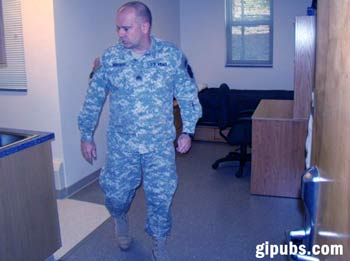
Before entering a barracks, you should develop a checklist to ensure you cover the essentials during every inspection.
Room Inspections
Once all common areas are inspected begin inspecting rooms. Before you enter the room check to ensure the door is properly marked in accordance with unit policy and then examine the door for any sign of abuse or wear.
Check the common areas of the room such as the bathroom, cabinets, etc. Any deficiencies in the room should be annotated on a sheet of paper that stays in the room. This paper should contain all deficiencies and the status of any work orders that were submitted. Work orders over one week old should be reviewed with senior members of the unit in an attempt to seek resolution. While inspecting common areas you should be alert for any unusual smells that could indicate faulty plumbing, mildew, drug or alcohol use, etc.
Then proceed to check each Soldier’s area. Check the layout for appearance, completeness, and to ensure it is in accordance with unit policy.
All equipment should be checked for cleanliness and serviceability. When checking the Soldier’s wall locker look for unusual signs like worn out undergarments or a locker that appears to be only for display. These could be indicators of other issues. For example, a Soldier could be staying off post without authorization or experiencing financial problems that make it difficult for him to purchase clothing requirements.
Depending on how much time you have you may wish to pick a few things to check in each Soldier’s area and then check the same equipment on every Soldier only deviating when you see negative indicators that give you cause to check something else out. This method ensures each Soldier get the same amount of attention and is treated the same. If you try to do a 100% inspection, some Soldiers may not get inspected at all. Just make sure you have a plan. The last thing you want is a Soldier to work hard preparing for an inspection only to not be inspected at all. This can quickly hurt morale.
Pick a handful of important standards to check. If you find trouble, inspect further.
While inspecting personal areas look for any indication of unauthorized equipment, illicit drugs, expired prescriptions, prescriptions with other individual’s names, weapons, etc. If you find any illegal activity you should immediately secure the area and notify senior leaders.
The same procedures can be used when conducting a health and welfare inspection. These inspections usually require coordination with military police for drug dogs or other assets. If you use dogs in your search ensure the dog handlers use common courtesy when allowing the dogs to inspect the area.
WAR STORY
During an inspection, one of the drug dogs made a mess in a Soldier’s room and the MP began laughing. We made the MP clean it up. Needless to say he stopped laughing but this incident was not a positive one for the Soldier in the room. He felt as if his home had been invaded, his privacy breached, and to top it off the MP found it all humorous. While there is nothing that can be done about the first two issues other than explaining the necessity for the inspection, the command could have had a discussion with the MP prior to the inspection about professionalism and how the inspection would be conducted. Bottom line if you bring in external agencies for an inspection lay down the ground rules and ensure they treat your Soldiers with dignity and respect.
Once you have completed the inspection of the room you should review the deficiencies and exceptional performances with the Soldiers and come up with a plan of action to correct the deficient areas.
If you run into a room that is extremely filthy it raises a few questions:
- Has the first line leader been checking this room?
- If he has, why is it this way?
- If they have not been inspecting, why not?
- Why does the Soldier believe this is an acceptable standard to live with?
- Does the Soldier realize that his poor health habits could adversely affect others?
You must develop a plan of action to correct the substandard performance on the Soldier’s part and the leader’s failure to ensure the Soldier maintains a standard. The key to effective billet inspections is to treat your Soldiers with respect and dignity. Treat them as you would want to be treated.
Read The Trainer: A Training Guide for all ranks for more information about Army Training techniques, tactics, and procedures including training best practices and example scenarios.










Comments
Teresa
I currently maintain a sterile corner of the room (i have a roommate) as i live off post and my chain of command is fully aware of that. The person who is currently filling in for the squad leader gives us a text on saturday telling us she will be by on sunday in the morning to do room inspections. As sunday comes by, the acting squad leader text me around 1230 to tell me she is on her way to my room. I inform her that my roommate should be there, since i only maintain the room. She tells me that because she told me she was going to inspect it that i had to have been waiting for her all morning until she showed up, and that i had to make my bed. I could not find a regulation that said i must put linen on my bed nor one that said i must sit outside my room waiting on her to show up on a sunday morning. I am now getting counseled by her for not being at the right place. Was i in the absolute wrong? Please and Thank you.
Mark Gerecht
Teresa,
Based on the situation as you described it seems alittle odd. If there was a reason for the inspection, poor conditions in the room, etc. I could see having you come in on Sunday. Linen on the bed that may be a unit requirement. Would recommend you check your billet SOP and with your platoon sergeant and or 1SG. Usually a leader will state something like we will conduct a room inspection at 1300 hours on Sunday. I have not heard of I will be there sometime that day so just hang out. If you are getting a counseling statement do not get bent out of shape. Simply disagree with the counseling statement and write your side of the situation in the session closing block or on a separate sheet of paper. If this is a big issue for you then run it up through the chain of command. If the NCO is out of line the platoon sergeant or 1SG will discuss it with them. If you do decide to take it to the chain of command make sure you are factual, calm, and professional.
The following post might be of interest to you:
U.S. Army Inspections: Barracks Inspection
Can Leaders Trash a Room during an Inspection?
Can my 1SG make me keep my room to basic training standards and inspect me every day – including weekends?
Am I required to live in the barracks/billets?
Hope this Helps!
Did you find this response helpful? I would appreciate your feedback!
TOP
Teresa
Thank you for your help. I looked at the unit SOP & barracks management & non of them specified having to make my bed or put uniforms in the closet. I still went ahead & did it anyways. Since that occasion the CPL has only came to do a Sunday room inspection on me & I have a Saturday room inspection coming up this 3 day weekend.
pv2vassar
If i live in on post hlusing can my ncoic still inspect my house with my wife and kids. There
Mark Gerecht
I would encourage you to read this post. I believe it will answer your questions.
Can I inspect a Soldier’s Quarters or Off Post Housing?
Did you find this information useful? I would appreciate your feedback!
TOP
Mark Gerecht
I believe you will find your answer in this post. On base housing is more or less just like living in an apartment off base.
Can I inspect a Soldier’s quarters or off post housing for health and welfare?
Hope this helps!
Did you find this response useful? I would appreciate your feedback!
TOP
SGT Jane doe
Can the 1SG decided to do a room inspections on the weekend and make it mandatory for all occupants to be present. ….on a three day?
SSG Layne
Thank you for this article. There is a lot of great advice here !
Jessie
Can leadership enter a room without soldier being present? Or even check my computer while I’m not present? I am wondering this because I have over $20,000 worth of personal items in my room. I don’t like persons in my room when I’m not away and don’t understand how my room is secure if they can come in when ever they feel like it
Eck
Yes, leadership can enter a room without the Soldier present to perform health and welfare inspections. They can only look at what is out in the open. They are not authorized to open drawers move stuff around , etc. That is a search not an inspection. Only the commander or a member of law enforcement can authorize a search, and then, only when probable cause is established.
As far as your computer goes, they can only look at what is on the screen in open view. If the computer is off they are not allowed to turn it on. If it’s a laptop and the closed, they are not allowed to open it up. If it is on, they are not allowed to dig around the files, open programs, etc.
I understand how you feel about leadership going through your room without you being present, but it is authorized. I never cared for it when I lived in the barracks. The main reason for these inspections is to see how the Soldiers are living from day to day, ensuring cleanliness and the maintenance of the facilities.
You mentioned you have over $20,000 worth of personal items in your room. I strongly recommend, if you haven’t already, you fill out an inventory sheet of your valuables, including serial numbers, and have it placed in your unit personnel file. Also, keep a copy for your records. This will assist in the unfortunate event your room is broken into. It will assist with any claim you may have in the event of loss or damage. I would also suggest you look into taking out a renters insurance policy to help cover any unfortunate losses or damage to your items.
I hope you found this useful.
Eck
“I am not an attorney and any views presented are my own and are not to be interpreted as legal advice. Furthermore, my views do not necessarily represent the views of DoD or its Components.”
MrNeedsFacts
I do see that in AR 190-22, that inspections are different from searches and that inspections cannot be used as subterfuge for conducting a search (AR 190-22). But could you please state which AR and CH/Paragraph states that are not allowed to open drawers and move items around during a routine room inspection (for both the case of with the SM present or SM is absent)? That would be great!!
Mike
Can leadership enter a soldiers room when the soldier isn’t present?
I ask because this has been happening to me. I’m not hiding anything, but feel disrespected when this happens. This is my home away from home and I don’t let random people in my house while I’m gone.
They also knock (When I am present) as they are putting the master key in the lock and let themselves in. They don’t even give me time to stand up before they are in my room. I get why inspections are necessary. I’ve seen what happens to a barrack/room that doesn’t get inspected, but a little respect and courtesy goes a long way.
Thanks for the advice.
Eck
Hi Mike,
Leadership can enter the barracks unannounced to ensure the health and welfare of the Soldiers living in the barracks. This can occur whether or not the Soldier is in the room or not. There are better ways to perform an inspection when the Soldier is in the room than just knocking and walking in. However, it is not required to wait for the Soldier to open the door.
From your post, you understand the necessity for inspections and, do to past problems in the barracks, these inspections are going to continue.
While it is an inconvenience, especially if you are in the room relaxing when the command walks through, by having your room in acceptable condition, your room will get less scrutiny than other Soldiers who don’t keep their room as well maintained.
I hope you found this information useful.
Eck
“The views presented by the author are his own and do not necessarily represent the views of DoD or its Components.”
Disclaimer: I am not an attorney and any views presented are my own and are not to be interpreted as legal advice. Furthermore, my views do not necessarily represent the views of DoD or its Components.
Red
This is incorrect, they must have probable cause, consent, or established a date and time in the reasonable future.
See Military Rules of Court Martial rules 313, 314, and 315.
Eck
Red,
MCM Rule 313, “Inspections
may utilize any reasonable natural or technological
aid and may be conducted with or without notice to
those inspected.”
Rule 314, covers searches that do not require probable cause. A search is totally different than an inspection. A search is when the command is looking for something specific, i.e. contraband, evidence of a crime, etc. This was not the questions asked above. The questions referred to inspections, not searches. Two totally different legal scenarios.
Rule 315, covers Probable Cause Searches, again, this addresses a search, not an inspection.
An inspection is administrative in nature, where a search is a function of gathering evidence that may or may not require probable cause. Rule 314 versus Rule 315.
The command does not require permission, notification to, or the presence of the Soldier to inspect their room in the barracks.
Again, searches are an entirely different animal with different and more stringent requirements than a search.
I hope this helps.
Eck
Last sentence should be: “Again, searches are an entirely different animal with different and more stringent requirements than an inspection.”
lilsoldierboy
Anyone know the ar for what qualifies as room inspection or search the whole can’t open draws intrigues me since I consistantly undergo extra pt for having specs of dust in some of my empty drawers.
Part-Time-Commander
As a young Soldier, I never really enjoyed the barracks inspections. I understand they are important and necessary, but I always felt that my privacy was being invaded. A true professional (NCO/Officer) can conduct an inspection the right way, so the person with the room getting inspected can still have some privacy. There is definitely a right way and wrong way to do a barracks inspection. Just my two cents.
Jesse Jaymes
Thank you very much your very helpful. Been most helpful but like I said before . Having my room checked at 05:30 allows me to be up and awake for PT and makes me wanna push myself instead of trying to wake up. Thank you for the advice.