




The third article in the inspection series covers techniques and guidelines for conducting barracks inspections. Frequent barracks inspections provide leaders the ability to monitor the health and welfare of their Soldiers. Many Soldiers feel this inspection is unfair as they are subject to more inspections than the Soldiers who live off-post or in post quarters. To some degree this is understandable but Soldiers must also understand that unit leadership is directly responsible for helping to maintain the barracks and therefore must actively check the barrack to ensure proper maintenance is being conducted and that Soldiers are taking care of the barracks.
Click to read Part 1 of this series: U.S. Army Inspections: The Basics
Click to read Part 2 of this series: U.S. Army Inspections: Planning & Preparation
Squad leaders should be checking the barrack on an informal basis 2-3 times a week. The platoon sergeant should be conducting an informal check weekly along with the First Sergeant. These checks should include spot checking rooms for cleanliness/neatness, physical security compliance, equipment failures, and maintenance issues.

Barracks equipment should receive prompt maintenance after a problem is reported. If you expect to have your Soldiers to keep their environment to standard, you must help them resolve the problems that are outside of their control.
One of the chief complaints I have heard from Soldiers is about unsatisfactory maintenance in the barracks. Soldiers find it can take days to resolve equipment problems such as failing air conditioners or heaters after they report them. Leaders must make fixing issues in the barrack a priority as it has a direct bearing on the health, welfare, and morale of the Soldiers living in the barracks. There is nothing more frustrating than being inspected on a frequent basis and reporting equipment problems only to have them ignored and being forced to live in an environment that is not up to standard. It is contradictory. The command must push barrack issues up the chain to get prompt repairs and resolve issues quickly.
If a formal inspection is to be conducted the unit will provide specific requirements about how to lay out equipment and prepare the room for an inspection. Guidelines for barrack inspections can be found in FM 3-21.5 and unit policy.
Entry into the Barracks
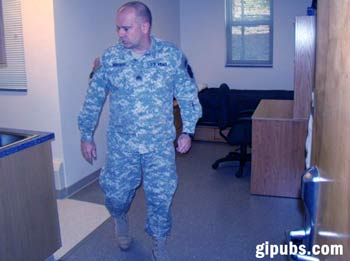
As the leader enters the barracks they should check for any signs of equipment failure and inspect common areas. If common areas are not to standard they should look for the common area cleanup roster. This clean up roster should be readily visible and available to any Soldier living in the barracks. Some inspection points may for common areas could include:
- Is the floor clean and properly maintained? If not, do the Soldiers have the proper supplies and resources to do the job correctly?
- Are vending machines in good working order?
- Are there any indications that vending machines are being abused?
- Is there any evidence to suggest that barrack areas are being abused or not properly cared for?
WAR STORY
While inspecting a common area during a platoon barrack inspection, I noticed several small pieces of brown beer bottle glass in the cracks of the tile floor along the wall. It seemed a little strange, so I discussed it with the squad leaders and we continued the inspection. Later in the inspection I noticed a softball in a Soldier’s room that appeared rather banged up (cut up to be exact). The Soldier and I talked about the ball a little and then I noticed a small piece of brown glass in the ball. I asked the Soldier if he knew how the glass got there and the Soldier said he had no idea. I found this interesting. Later that night while on post I decided to stop by the barracks to check things out. As I entered the common area there was a large group of Soldier drinking and having a great time bowling with a softball and using beer bottles for pins. Oh, the Soldier who “had no idea” was about to bowl when I came in. Soldiers will be Soldiers but my point is: I saw some indicators and decided to follow up on them. All leaders must be on the look out for indicators “good or bad.” We cannot ignore them or we set our Soldiers and unit up for failure. By the way, the Soldiers enjoyed some great corrective training after this issue.
Before entering a barracks, you should develop a checklist to ensure you cover the essentials during every inspection.
Room Inspections
Once all common areas are inspected begin inspecting rooms. Before you enter the room check to ensure the door is properly marked in accordance with unit policy and then examine the door for any sign of abuse or wear.
Check the common areas of the room such as the bathroom, cabinets, etc. Any deficiencies in the room should be annotated on a sheet of paper that stays in the room. This paper should contain all deficiencies and the status of any work orders that were submitted. Work orders over one week old should be reviewed with senior members of the unit in an attempt to seek resolution. While inspecting common areas you should be alert for any unusual smells that could indicate faulty plumbing, mildew, drug or alcohol use, etc.
Then proceed to check each Soldier’s area. Check the layout for appearance, completeness, and to ensure it is in accordance with unit policy.
All equipment should be checked for cleanliness and serviceability. When checking the Soldier’s wall locker look for unusual signs like worn out undergarments or a locker that appears to be only for display. These could be indicators of other issues. For example, a Soldier could be staying off post without authorization or experiencing financial problems that make it difficult for him to purchase clothing requirements.
Depending on how much time you have you may wish to pick a few things to check in each Soldier’s area and then check the same equipment on every Soldier only deviating when you see negative indicators that give you cause to check something else out. This method ensures each Soldier get the same amount of attention and is treated the same. If you try to do a 100% inspection, some Soldiers may not get inspected at all. Just make sure you have a plan. The last thing you want is a Soldier to work hard preparing for an inspection only to not be inspected at all. This can quickly hurt morale.
Pick a handful of important standards to check. If you find trouble, inspect further.
While inspecting personal areas look for any indication of unauthorized equipment, illicit drugs, expired prescriptions, prescriptions with other individual’s names, weapons, etc. If you find any illegal activity you should immediately secure the area and notify senior leaders.
The same procedures can be used when conducting a health and welfare inspection. These inspections usually require coordination with military police for drug dogs or other assets. If you use dogs in your search ensure the dog handlers use common courtesy when allowing the dogs to inspect the area.
WAR STORY
During an inspection, one of the drug dogs made a mess in a Soldier’s room and the MP began laughing. We made the MP clean it up. Needless to say he stopped laughing but this incident was not a positive one for the Soldier in the room. He felt as if his home had been invaded, his privacy breached, and to top it off the MP found it all humorous. While there is nothing that can be done about the first two issues other than explaining the necessity for the inspection, the command could have had a discussion with the MP prior to the inspection about professionalism and how the inspection would be conducted. Bottom line if you bring in external agencies for an inspection lay down the ground rules and ensure they treat your Soldiers with dignity and respect.
Once you have completed the inspection of the room you should review the deficiencies and exceptional performances with the Soldiers and come up with a plan of action to correct the deficient areas.
If you run into a room that is extremely filthy it raises a few questions:
- Has the first line leader been checking this room?
- If he has, why is it this way?
- If they have not been inspecting, why not?
- Why does the Soldier believe this is an acceptable standard to live with?
- Does the Soldier realize that his poor health habits could adversely affect others?
You must develop a plan of action to correct the substandard performance on the Soldier’s part and the leader’s failure to ensure the Soldier maintains a standard. The key to effective billet inspections is to treat your Soldiers with respect and dignity. Treat them as you would want to be treated.
Read The Trainer: A Training Guide for all ranks for more information about Army Training techniques, tactics, and procedures including training best practices and example scenarios.










Comments
Eck
First, I commend you for preparing your uniform the night before and being ready for the next duty day. As long as your room is neat in appearance, having your uniform laying on your TAC box in preparation for the next day should not be an issue. Your room is not required to be “inspection ready” at all times. You live in your room and I’m sure your NCO’s homes are not inspection ready everyday. As long as your room is neat and orderly, i.e. trash taken care of, doesn’t smell, etc, there should be no issues. It sounds as if your NCO is going overboard to ensure his Soldiers rooms are squared away.
Has this been the standard since you’ve been in the unit or is this a recent change? I am guessing your NCO was told by one of his superiors that he/she would be held accountable if their Soldier’s rooms were not squared away when the 1SG or CSM walks through. The command could be setting themselves up for an IG complaint.
As far as inspecting cars for cleanliness on the inside. Absolutely not. Your vehicle is private property that, again, unless the commander has probable cause to believe there is contraband or something else illegal in it, you do not have to let them inspect the inside. It is beginning to sound to me as if your NCO’s/command is trying to use inspections as a subterfuge to perform searches.
The command should be consulting with their servicing Staff Judge Advocate Office to ensure they are not violating the Soldiers right to privacy. The command can inspect your vehicle for safety purposes and that requirement is probably part of the unit safety policy. i.e. check tires, registration, insurance, windshield, etc. This is a safety inspection which does not give them the right to have you open boxes or bags which may be in the vehicle.
Now, having pointed all this out, I highly recommend you be professional and do not make this personal when asked to do some of these things. If you have nothing to hide, a better approach may be to allow them to look at your vehicle the first time they ask and then go speak with the IG or your servicing legal office at a later time. You can talk to the IG without making a formal complaint. If you know the paralegal assigned to your battalion, you could ask them also.
I hope this helps. If you have more direct questions pertaining to your situation you can email me directly at doug@asktop.net
ECK
Disclaimer: I am not an attorney and any views presented are my own and are not to be interpreted as legal advice. Furthermore, my views do not necessarily represent the views of DoD or its Components.
jesse jaymes
Im a e4 living in the barracks , we get our room inspected every morning at05:30 which im ok with atleast i know i wont be late for PT Formation and I know for rest of day my room is clean. my question is this. Do NCO’s have the right to open my dresser drawers and tell me to fold my clothes better or a different way? Also. I had a BIG BOOBER COOLER in my room. It looks like a fishing boober if you wast sure. One morning it was open and my Nco’s found money in it. I was told to lock my money up in a secure place. I told them if you wouldnt have unlocked my cooler and open it without my peermission you would never have found my money. Who is right in this situation? I was told by mySSG even if i have a small lock box to put my money in and if he thinks he could drop it and it open or use a screw driver to open it then its really not secured. Can someone help me out?
Eck
Hi SPC Jaymes,
Unless everyone being inspected is told to have their drawers open, then your NCO’s do not have the right to open your drawers without your permission. Now, if they ask and you grant them permission, then they can open them. However, they are not allowed to rummage through them and move things around. They can only look at what is in plain view.
As far the money issue is concerned. First off, you should keep your money in a secured place that can not be easily gotten into. This may be a requirement of your units security/barracks SOP. If you have money unsecured and it is stolen, you probably will not have a basis for a claim.
Now, to answer your question. If, your cooler had a lock on it, then it meets the legal definition of being secured. If it only has a clasp that does not require a key or some type of combination to open, then it is not secured. Now, you say that the NCO opened the cooler without your permission. If that is the case, then nothing they find could be used against you. It is an illegal search and seizure if they open containers, drawers, etc, without the Soldier’s permission or an authorization to perform a search by the commander.
Your NCOs are doing an inspection not a search. As such they can only look at what is in plain view. While it sounds like your NCOs are going over board and possibly violating your right to privacy, it appears they are doing so with the best of intentions. This does not excuse their actions, but does put it into perspective.
The NCO’s need to be aware that if they are opening drawers without authorization and they would find a weapon, contraband, drugs, etc, that evidence would not be admissible in any UCMJ or court-martial actions.
I hope this information helps.
ECK
Disclaimer: I am not an attorney and any views presented are my own and are not to be interpreted as legal advice. Furthermore, my views do not necessarily represent the views of DoD or its Components.
Jesse Jaymes
Thank you very much , Like I said its not that having my room inspected everyday at 05:30 is a problem , because if 1st SGT or CSM does walk threw the barracks ramdomly we look good completely understandable in my eyes.
The cooler ok understandable about the latches on the side verses a real lock.
Also I have been told that the NCO’S will now be doing weekly car inspections to make sure our cars are clean on the inside. Is this legal?
I been in Army about 3 years and since in been in my Unit . I try to plan ahead each night i lay my PT Uniform and my ACU s out on my tach box so in morning or after PT i dont have to look for anything. It maybe lazy or smart either way. I was told I couldnt do that anymore because it doesnt look neat. Like I said I’m new to Army but its a prepared soldier the soldier everyone wants to have.
Knox92G
Are my leaders allowed to inspect my room while i am at work and with out me being notified or informed or even present for that matter and if they are can i be given a negative counsling and punishment as result?
Mark Gerecht
Yes, they can inspect your room without you present. They can provide a negative counseling statement with corrective training. If they something serious it could warrant UCMJ action. There are several articles and Q&A about inspections and events associated with inspections on ASKTOP. You might want to conduct a search on ASKTOP for this information.
This process usually falls under maintaining the health, welfare, and safety of Soldiers and is usually covered by local policy.
Did you find this information useful! We appreciate your feedback!
TOP
11B1PDave
what if my rrom is not legitimately dirty? I was counciled for this and the floors are swept my bed is made it just i have an abundance of equipment and a very small room being an assistant gunner i have at least 600rounds of 7.62×51 linked in ammo purses an ag bag and 2 duffle bags an m4 and my kit and a large dresser taking up a 7×9 living space the other side is my roommetes and in his early morning stupor tends to knock stuff over and kick about my stuff, by accident of course but its usually about that time he sees it. Its not dirty by any means, being a team leader i have literally seen crap everywhere but does this warrant him to inspect my dresser which is always shut to prevent my roommate from walking into it. I have all my items sorted and arranged my way but im being counciled on it not being how he wants it yet when i ask for an example of how he would like it arranged he tellme to use common sense which is exactly what i was doing in the first place. Is he OCD or insane, possiably singling me out because i have seen my roommates dresser its so cluttered. BUt this is the same guy that studied with my squad mate day and night but when its my time to get ready for the board he wont give me any such assistance. It to the point I want to fight him i have tried civil unemotional conversation stating only facts, but to no posative result. what do i. i have to tollerate this for 4 more months and i dont think i can without him and i coming to blows.
SGT NICK
I know what TOP said is probably what you did not want to hear but it is the truth. Unannounced usually happen because drugs or something that was not suppose to be in the barracks was found either in the company, battalion, or brigade. The COC probably won’t diverge that information to you, you will have to hear it from the grapevine. Keep your room clean at all times and do not break posted barracks policies about not having a class 6 full of alcohol or whatever is posted at your living quarters.
Eck
SGT Nick,
Your response is based on conjecture and assumptions that are not normally the case in most units. Unannounced inspections happen all the time, usually weekly at a minimum, by the 1SG or his/her representative. The basis of which is to ensure the “health and welfare” of the Soldiers living conditions. They are looking for maintenance issues, cleanliness of the living conditions, and if barracks policies are being followed. The rank and file Soldiers normally only are aware these have taken place when something is found wrong. If things are in order, nothing is usually said to the Soldiers. The way it sounds with Knox92G is that his room wasn’t to standard and he was counseled and given corrective training, which Knox92G referred to as punishment.
IF the command was performing a walk through to look for drugs or other contraband, then the command would be guilty of conducting a search (which requires probable cause) while trying to pass it off as an inspection. In this case, any evidence gathered would be not be admissible for UCMJ action. What most commands do when concerned about drugs in the barracks is schedule a health and welfare with the Soldiers present, and have the MP’s brings the drug dogs through.
Disclaimer: I am not an attorney and any views presented are my own and are not to be interpreted as legal advice. Furthermore, my views do not necessarily represent the views of DoD or its Components.
joe snuffy you dont need to know
This is a horrible guide line to intruding on a single soldiers life. yes I do under stand that there are stupid people leeking into the military and yes they do do stupid things. thats why single soldiers E-6 and below on Ft. Campbell live in the barracks and in major part due to finatial cuts. but with this guide line on your (perfect) form of leader ship WHEN IS THE LAST TIME YOU WENT AND STRINGENTLY INSPECTED A SOLDIERS HOUSE OFF POST???? You claim yourself such an expert on leadership you have all but forgotten what it is like to be a junior enlisted soldier. That is if you even know some people after all have a rich momy and daddy or they are senior enlisted or officer members (officers being rediculously over paid for doing little work) any ways back to the point. my unit verry much so hinders promotions so I have been stuck as an E-4 after 5 years of enlistment (request to go to the board are all ways denied) but heck this is reallity hard work in the modern army does NOT get rewarded in any amout of time it is rather who you know that gets you promoted so people you dont even like will stop coming into the only home you can afford. wish i could get promoted. but I seem to lack a distiguished flying cross, and a masters degree.
Mark Gerecht
First, thanks for offering a different point of view. It is always good to look at issues from a Soldier’s point of view.
“Horrible guide”
Perhaps this is true from your perspective, but I believe you will most likely have a different perspective as you become responsible for your Soldiers’ health and welfare. Keep in mind the inspections and practices I discuss are not to be abused or used to harass Soldiers, but to ensure they are living in a suitable area and maintaining their room and government equipment to standard. These are standards most well-disciplined Soldiers understand and respect. As long as inspections are conducted in a reasonable and respectful manner.
“Single Soldier E-6 and below on Fort Campbell live in the barrack and in major part due to finatial cuts”
Financial cuts do play a factor in reduced availability for Single Soldiers being able to obtain BAH. Also, increased availability of single Soldier living quarters plays a part as well. This too will pass. The Draw-down and tightening of funds occurs on average about every 10 years and lasts for 2-4 years. Then things begin to balance out again.
“When is the last time you went and stringently inspected a Soldier House off Post?”
Typically Soldiers off post were inspected annually from a health and welfare perspective and more frequently if the command had other concerns. But, as is typical in life, standards and conditions change. Meaning that military and civilian laws vary in these situations. A Soldier living on post is living in a government facility and required to maintain it to standard. A Soldier living off post is spending all or a portion of his government allowance to rent or buy an off post residence and other laws apply that are not applicable to on post Single Soldier billets. Part of being a Soldier and a Leader is understanding the specifics of a situation and being able to take the appropriate action. It is not uncommon to have these types of variations for example: Soldiers with POVs are required to have their cars inspected per unit and Army requirements while those without POVs are not subject to this requirement. No one said life was fair. No matter how hard you try there will never be perfect equity. You always have the choice to move out of the barrack and live on your own. Or simply maintain a room in the barracks. You might want to check out other information we have posted about off-post housing inspections: Can I inspect a Soldier’s quarters or off post housing for health and welfare? and Can my leader inspect off post housing? Be sure to check out the comments on the post as well as they provide some interesting insight.
“officers being ridiculously over paid for doing little work”
You might find this issue is discussed in the following article: Do NCO’s deserve more pay?
“I have been stuck as an E-4 after 5 years of enlistment (request to go to the board are all ways denied).”
This is unusual. There are requirements in place to prevent this issue and ensure deserving Soldiers are boarded in an appropriate manner. AR 600-8-19 covers the counseling requirements for these issues. In addition AR 600-8-19 also covers the procedures that need to be followed when a Soldier does not warrant a promotion for a variety of reasons. Consider reading AR 600-8-19 and find out if those procedures are being implemented correctly. An E-4 with 5 years time in service is, in my experience, a very rare event. Especially given the high rate of accelerated promotions over the past 12 years. The typical SGT at this point in time on active duty has about 3-4 years time in service, some have much less. I would recommend you seek out a senior leader you respect and get some one-on-one mentorship and personal insight from this leader about how you can get promoted rather than focusing on the past. I would encourage you to look at attitude and tone first. Everything in life is based on attitude and tone. You cannot control how someone treats you, but you can control your response. The best response is to always take the high ground. Be professional, unemotional, and factual. When you do that, even leaders who may not necessarily care for your personality will tend to respect you and see potential in you. It’s all about Karma… you get what you send out.
“wish i could get promoted. but I seem to lack a distinguished flying cross, and a masters degree.”
You can get promoted but it will require you to take a serious look at yourself, your situation, and your unit. You will have to consider the whole picture and develop a game plan. If you allow yourself to stay trapped in your current state and looking over your shoulder at the past you most likely will not succeed. But should you choose to make a fair and accurate assessment of your current situation and then develop a plan with a senior leader you respect, your odds of promotion will dramatically increase. You don’t have to kiss anyone’s butt… just be a disciplined Soldier, treat people like you want to be treated, do your best, and keep a positive attitude and tone.
“Finance”
You control your finances and how they are spent. As a SPC I lived well and had plenty of money, because I lived within my means. I was married and my spouse did not work. I saved the money from every promotion, longevity increase, and annual pay raise. This allowed me to live a life of choice rather than everything being an emergency. When we paid off our car note we kept sending that amount of money to the bank and never touched it. 4 years later we paid cash for another car. Financial management is about personal discipline and choice. This is not an Army or social responsibility, it is a personal decision and responsibility.
“You claim yourself such an expert on leadership you have all but forgotten what it is like to be a junior enlisted soldier”
You are correct to some degree. Numerous people call me an expert and ask me to testify or assist in a wide variety of issues and we help 1000’s of Soldiers and leaders on a frequent basis. However, expertise is in the eye of the individual beholder. Most of my junior Soldiers are now 1SG, CSM, MAJ, LTC, and/or CW3 now. Many of them communicate with me and say things like, “I never understood why you did (blank) even when you tried to explain it to me I just didn’t see it from that perspective. But as I got promoted and became a more experienced leader I got it.” It’s not that I always made the right decision, but I always tried my best to treat my Soldiers as I wanted to be treated. I believe I keep my pulse on understanding things from a junior enlisted perspective by frequently interacting with Soldiers on the website and during my travel schedules to locations across the nation. I also enjoy the satisfaction of knowing many of the Soldiers I interacted with on active duty stay in touch with me and have achieved significant success in the Army.
Summary
You see, Joe Snuffy, most of life is what you make of it and how you choose to interact with those around you. The true measure of who you are as a person and as a Soldier is displayed in how you handle difficult and adverse conditions. Anyone can perform when times are good… it takes discipline and strong character to persevere when times are tough.
Thanks for your comments! I wish you the best in your future endeavors
TOP
Spc whitehurst
i have a question. when they do checks and as far as Nco going thru a soldier stuff does the soldier have to be there while his room gets checked?
Mark Gerecht
SPC Whitehurst,
It is not uncommon for leaders to conduct room inspections while Soldiers are at their duty location. Usually such inspections are quick walk throughs checking to make sure the room is not trashed and that there are no maintenance issues that require attention. The goal is to ensure the health and welfare of the Soldiers in the barracks.
You made a comment about going through a Soldier’s stuff without the Soldier present. Typically in these type of inspections leaders do not go through a Soldier’s personal property unless it is unsecure, in plain sight, and/or in some way gains their attention in a negative manner. If your room is being “trashed” by leaders this is an unacceptable practice.
TOP
SGT NICK
One important part not brought up here is females…. Make sure you have another person, especially an NCO with you when you do a informal inspection. And if someone is not there, then do not check the room, if the Chain of Command brings it up tell them why. My Commander tried to chide me because I told her I was not going to make spot checks on my female soldiers on weekend nights, I don’t care if the building was on fire I’m not going there without another NCOs (plural) meeting me there that late.
Eck
SGT Nick,
You bring up a very good point on inspecting female Soldier rooms. However, it is not necessary to treat female rooms any different than male rooms. When doing a walk through, male or female room, just ensure you have at least one other NCO with you. If you are doing a female room, it is preferable to have a female NCO with you, but not necessary, another male NCO will suffice. If you are checking on your Soldiers, male or female, and they are not in their room, unless you have probable cause to believe their immediate health is in danger, you should have no reason to enter their room.
Hope this helps.
Disclaimer: I am not an attorney and any views presented are my own and are not to be interpreted as legal advice. Furthermore, my views do not necessarily represent the views of DoD or its Components.
pfc bailey
when conducting a health and welfare inspection are NCO’s allowed to trash a room that was neat and in order?
Eck
No, they are not.
During a Health and Welfare inspection all Soldiers have to be treated exactly the same. The command can establish that all Soldiers will have their drawers open, cabinets open, etc. However, they can only look at what is in open view. They cannot move things around in the drawers, throw property around and/or empty containers without the Soldier’s permission. It is not an excuse to harass a Soldier.
If the NCO’s conducting the inspection are trashing your room during a health and welfare inspection they can be guilty of “hazing” and be in violation of AR 600-20. AR 600-20, para 4-20a defines hazing as “any conduct whereby one military member or employee, regardless of Service or rank, unnecessarily causes another military member or employee, regardless of Service or rank, to suffer or be exposed to an activity that is cruel, abusive, oppressive, or harmful.”
They could also be in violation of AR 600-100, Army Leadership, paragraph 2-1k, which states, Every leader will “Treat subordinates with dignity, respect, fairness, and consistency.”
I am curious if this is being done throughout the entire unit, if it’s being done just to you or everyone in your team/squad/platoon or just a couple “misguided” NCO’s doing there own thing.
I would recommend taking photographs of your room before an inspection and after the inspection. I would then approach the NCO who is the inspector’s immediate supervisor, whether that be the platoon sergeant or First Sergeant and discuss the issue. When doing this, ALWAYS be professional and address the issue. Do not make it a personal attack on the inspectors.
Always give your chain of command the opportunity to solve your issue at the lowest possible level. However, if after taking this up with your unit 1SG and/or Commander, you do not get the issue resolved to your satisfaction, you can always speak the Inspector General (IG) office at your installation.
I hope you found this helpful. If you need to discuss more specifics you can always email me directly at doug@asktop.net
Disclaimer: I am not an attorney and any views presented are my own and are not to be interpreted as legal advice. Furthermore, my views do not necessarily represent the views of DoD or its Components.
SGT jessie
do you have any reference material regarding health and welfare rules and regulations? i.e. soldiers rights, rules for the search such as who has to be present and what can and cant be searched or touched?
PFC Erickson
Are they able to go through you’re personnel things that’s not open just to “inspect you’re room” that’s not a health and welfare check?
Mark Gerecht
During an inspection, everyone has to be treated the same. I.E. Everyone inspected to the same standard. Now, if they have everyone with their drawers open, they cannot move things around in the drawers or look in between clothes, in pockets, etc. Only what is in the open view. Otherwise, it becomes a search.
PFC Erickson,
Here is the response from one of our Subject Matter Experts:
Technically, they can go through the whole room and look at whatever they want, moving everything around, open drawers, look in pockets, etc. However, anything they find will be inadmissible for UCMJ/Court Martial purposes. It boils down to what risk the commander is willing to take. Only the commander can authorize a search, and then only with probable cause.
Did you find this information useful? We appreciate your feedback!
TOP
klinger
i need to know the difference in a formal inspection and informal i also need a liable reference for this info thank you
Preston
Klinger,
Mark will probably have more information for you, but you can check out this article for information about formal vs. informal inspections: http://asktop.net/articles/u-s-army-inspections-the-basics/
Mark Gerecht
Klinger,
There is no regulatory reference for informal and formal. The series of articles discusses the methods used by leaders to conduct inspections. Informal inspections tend to be conducted with little or no notice (Example: walk thru in ranks inspection after during morning formation), while formal inspections tend to required more time, resources, and preparation. (Example: Command Inspection).
The article Preston pointed you to discusses this point as well.
Did you find this response useful?